
Small spaces can feel comfortable and inviting, but clutter builds quickly when there is not enough room for everything. The solution is not always buying more storage containers. Often, the best results come from using overlooked areas, choosing furniture carefully, and creating a simple system for everyday items.
These small-space storage ideas can help you organize your home without making it feel crowded. Whether you live in a studio apartment, a compact house, or simply have one challenging room, these strategies are easy to adapt.
Start by Using Vertical Space
When floor space is limited, look up. Walls provide valuable storage without taking up much room.
Install shelves above desks, sofas, beds, and countertops. Use them for books, baskets, plants, framed photos, and items you use regularly. Floating shelves create a clean look, while wall-mounted cabinets offer concealed storage.
Consider these vertical storage options:
– Tall bookcases that use the full height of a wall
– Pegboards for tools, craft supplies, or kitchen items
– Wall rails with hooks for bags, towels, or utensils
– Narrow shelving beside doors or windows
– Over-the-door organizers for shoes, accessories, and cleaning products
Leave some open space between stored items. A wall that is completely filled can look busy, even when everything is organized. Combining useful storage with a few decorative items creates a more balanced appearance.
Choose Furniture With Built-In Storage
Furniture that serves more than one purpose is especially helpful in a small home. Look for pieces that provide storage without requiring additional floor space.
A bed with drawers underneath can hold clothing, spare bedding, or seasonal items. An ottoman with a lift-up top can work as a footrest, extra seating, and a place to store blankets. A coffee table with shelves or drawers can keep remote controls, books, and games within reach.
Other useful choices include:
– Benches with hidden compartments
– Nightstands with drawers instead of open legs
– Desks with built-in shelves
– Storage headboards for books and small items
– Sofas with space beneath the seat or chaise
Before buying a storage-focused piece, measure the area carefully. Check the width, depth, height, and space needed to open drawers or doors. Furniture that technically fits but blocks a walkway will make the room less functional.
Make the Most of the Entryway
The entryway is often small, but it handles many daily items. Shoes, coats, bags, keys, mail, and umbrellas can quickly create clutter.
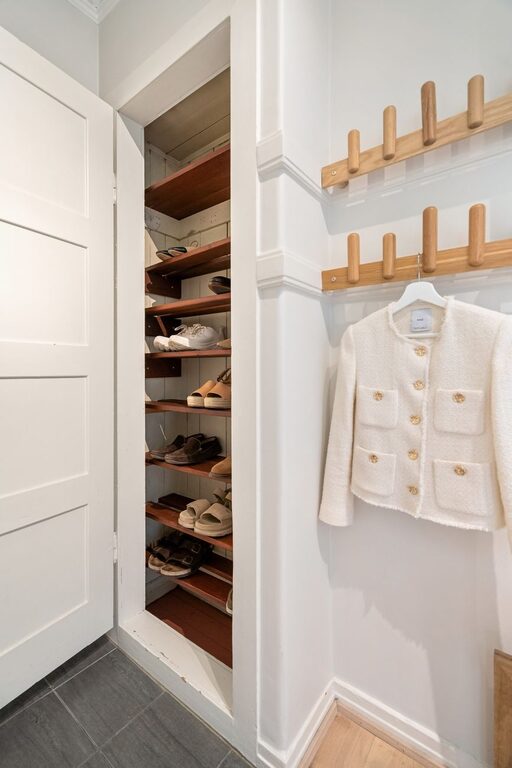
A narrow console table with drawers can provide a landing spot for keys and mail. If there is not enough room for a table, install a wall-mounted shelf with hooks underneath. A slim shoe cabinet can store footwear while keeping the floor clear.
Create simple zones for common items:
– Hooks for coats, hats, and bags
– A tray for keys and sunglasses
– A basket for shoes or reusable shopping bags
– A small container for mail that needs attention
– A mirror with a narrow shelf for last-minute essentials
Keep only the items you use regularly near the door. Store extra coats, special shoes, and seasonal accessories elsewhere to prevent the entryway from becoming overloaded.
Improve Kitchen Storage
Small kitchens benefit from making every cabinet and wall work harder. Begin by grouping similar items together and removing anything you rarely use.
Use shelf risers inside cabinets to create a second level for plates, mugs, or canned goods. Add pull-out bins to deep cabinets so items in the back are easier to reach. A lazy Susan can make corner cabinets more useful for sauces, spices, or baking supplies.
Other practical kitchen ideas include:
– Hanging a rail for cooking utensils
– Using the inside of cabinet doors for small tools
– Adding a magnetic strip for metal utensils
– Storing cutting boards vertically in a narrow divider
– Using stackable containers with matching lids
– Installing a slim rolling cart between appliances or cabinets
Keep countertops as clear as possible. Store frequently used appliances on a dedicated shelf or cart instead of allowing them to take over the work surface.
Organize the Bedroom Without Adding Clutter
Bedrooms often need to hold clothing, shoes, accessories, bedding, and personal items. When closet space is limited, use a combination of storage locations rather than relying on one crowded area.
Under-bed storage is one of the easiest solutions. Use shallow bins, zippered bags, or boxes with lids to protect seasonal clothing and spare linens. Choose containers that are easy to pull out, especially if you access them often.
Inside the closet, try:
– Matching slim hangers to save hanging space
– Hanging organizers for folded clothing or shoes
– Shelf dividers for bags and sweaters
– Hooks on the side wall for belts and scarves
– Small bins for accessories
Fold clothing vertically when possible so each item is visible. This makes it easier to find what you need without disturbing the entire drawer. Store less-used items higher up, and keep everyday clothing at eye level.
Use the Space Behind Doors
Doors offer hidden storage opportunities in many rooms. Over-the-door organizers are useful because they do not require permanent installation and can be moved when needed.
In a bathroom, a door organizer can hold hair tools, toiletries, and cleaning supplies. In a bedroom, it can store shoes, scarves, or small bags. A pantry door can hold spices, wraps, and snack items in narrow pockets.
Before installing an organizer, check whether the door closes properly with it in place. Choose a slim design if the door opens into a narrow hallway or sits close to another wall.
Turn Awkward Areas Into Useful Storage
Small homes often include unused corners, spaces beneath stairs, and narrow gaps beside furniture. These areas may not fit standard storage pieces, but they can still be useful.
A slim rolling cart can fit between a refrigerator and a wall. Corner shelves can hold books, plants, or bathroom supplies. A short cabinet beneath a window can provide storage while also functioning as a bench.
Look for these overlooked areas:
– The space above kitchen cabinets
– The area beneath a staircase
– The side of a refrigerator
– The back of a closet door
– The gap beside a washing machine
– The space under a window
– The top of a wardrobe or bookcase
Use attractive baskets or matching boxes in visible areas. This keeps small items together and makes unusual storage spaces look intentional.
Create a Simple Decluttering Routine
Storage works best when there are fewer items to manage. You do not need to clear out your entire home at once. Start with one drawer, shelf, or category.
Ask yourself:
– Do I use this item?
– Would I replace it if it disappeared?
– Do I have something similar?
– Is it worth the space it takes up?
– Does it belong in this room?
Sort items into three groups: keep, donate, and recycle or discard. Once an area is cleared, assign each remaining item a specific home. If something does not have a place, it may be a sign that you have more than the space can comfortably hold.
Set aside a few minutes each week to return items to their proper locations. A small, regular reset is easier than a major organizing project every few months.
Choose Storage That Matches Your Routine
The most effective storage is easy to use. If a box is difficult to open or an item is stored too far away, you are less likely to put things back.
Keep everyday items where you naturally use them. Store cleaning supplies near the areas you clean, cooking tools near the kitchen work zone, and chargers close to seating or bedside tables. Use labels when several containers look alike, especially in closets, cabinets, and storage areas.
Finally, avoid filling every available space. Leave a little room for new items and for comfortable movement. The goal is not to store as much as possible. It is to make your home easier to use, easier to maintain, and more comfortable each day.